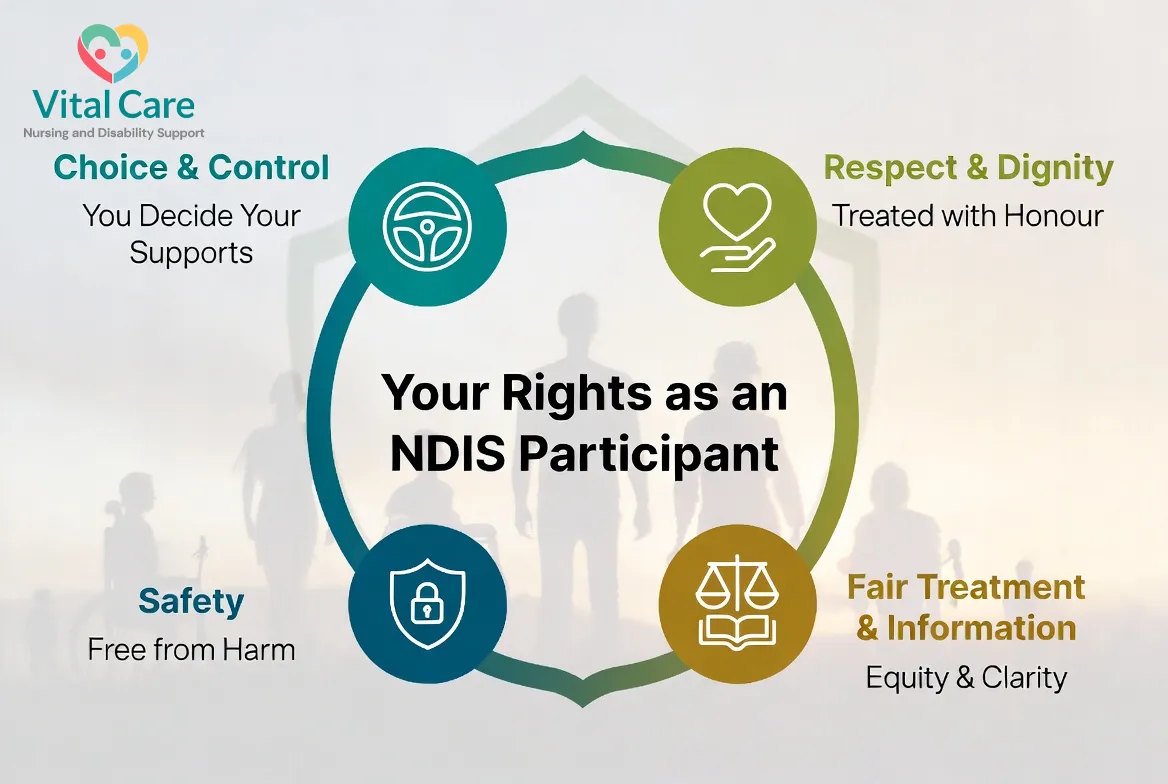
As an NDIS participant, you have strong legal rights and protections. Understanding these rights helps you receive safe, respectful, high-quality supports - and gives you the power to speak up when things aren't right.
Your rights are protected by: The NDIS Act 2013, NDIS Code of Conduct, NDIS Practice Standards, Australian disability discrimination laws, and the UN Convention on the Rights of Persons with Disabilities.
Your Core Rights as an NDIS Participant
1. The Right to Choice and Control
- Choose your own service providers
- Decide what supports you receive and when
- Change providers if you're unhappy
- Make your own decisions (or have them made with your support)
- Take risks as part of living your life
2. The Right to Respect and Dignity
- Be treated with respect at all times
- Have your culture, identity, and beliefs respected
- Privacy and confidentiality
- Live free from abuse, neglect, violence, and exploitation
3. The Right to Safety
- Receive safe, high-quality supports
- Be free from harm, abuse, neglect, or exploitation
- Report concerns without fear of consequences
- Access the NDIS Commission for complaints
4. The Right to Fair Treatment
- Be free from discrimination
- Access the same opportunities as other Australians
- Reasonable and necessary supports under the NDIS
- Appeal NDIS decisions you disagree with
5. The Right to Information and Communication
- Receive information in a format you understand
- Ask questions about your plan and funding
- Understand what services you're receiving
- Know how your money is being spent
The NDIS Code of Conduct
All NDIS providers and workers MUST follow the Code of Conduct, which requires them to:
- Act with respect for individual rights
- Not abuse, neglect, or exploit participants
- Act with integrity, honesty, and transparency
- Provide supports safely and competently
- Respect privacy
- Comply with all applicable laws
- Prevent and respond to violence, exploitation, neglect, and abuse
When Your Rights Are Violated
What You Can Do:
- Talk to the Provider First - Many issues can be resolved through direct communication
- Contact Your Support Coordinator or LAC - They can advocate for you
- Lodge a Complaint with the NDIS Commission
- Phone: 1800 035 544 (free call, Mon-Fri 9am-5pm)
- Website: ndiscommission.gov.au/participants/complaints
- Email: complaints@ndiscommission.gov.au
- Report to Police - If you've experienced a crime (assault, theft, sexual abuse, violence)
- Emergency: 000
- Non-emergency: 131 444
- Contact an Advocacy Service - Free, independent support
- Disability Advocacy Network Australia (DANA): dana.org.au
Your Right to Appeal NDIS Decisions
If you disagree with an NDIS decision, you have the right to:
- Request an internal review (free)
- Apply to the Administrative Appeals Tribunal (AAT) for external review
- Get support from an advocate to help with your appeal
Know Your Rights, Use Your Voice
Your rights exist to protect you and ensure you live the life you choose. Don't be afraid to ask questions, request changes, make complaints, or speak up when something doesn't feel right.
You deserve to be heard, respected, and safe.
Get Support to Understand Your Rights
At Vital Care, we're committed to upholding your rights in every interaction. If you ever have questions or concerns about your supports, our team is here to listen and help.
Book a Free ConsultationKey Contacts
| Organization | Contact | Purpose |
|---|---|---|
| NDIS Commission | 1800 035 544 | Complaints, Code of Conduct breaches |
| NDIA | 1800 800 110 | Questions about your plan |
| Emergency Services | 000 | Life-threatening situations |
| Police (non-emergency) | 131 444 | Report crimes |
References & Further Reading
📋 Important Disclaimer
This article provides general information only and is based on current NDIS policies and guidelines. It is not personalized advice for your specific situation.
For advice about your individual circumstances, please contact:
- Your NDIS planner or Local Area Coordinator (LAC)
- Your support coordinator
- The NDIA directly: 1800 800 110
Last Updated: January 25, 2026 | NDIS policies and procedures may change. Please verify current information with official NDIS channels.